

Guide
How Much Does Architectural Rendering Cost? (2026)
What studios, freelancers, in house seats, and AI rendering actually cost this year, and how to pick the option that fits the job.
7 min readRendervis
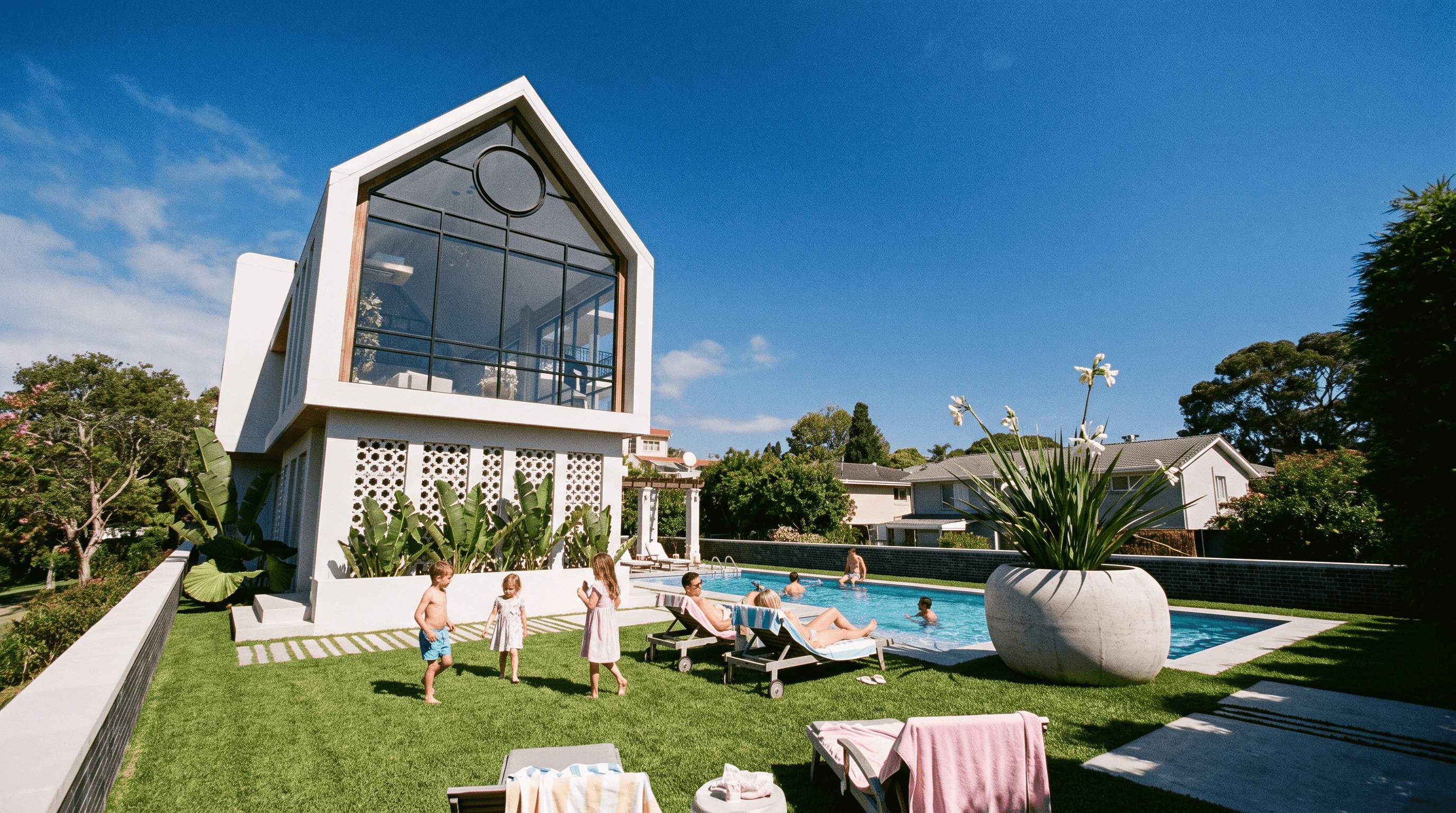
A professional still usually lands between $600 and $2,500 at a rendering studio. The market average sits around $1,500 per image. Below you will find typical 2026 ranges, the extras that blow a quote, what it costs to render in house, and where AI changes the math.
If you have ever asked a few studios for a number, you already know the joke. Everyone sounds sure. Nobody agrees.
Architectural rendering cost in 2026 can mean a $30 marketplace gig or a $4,000 hero exterior. That is not because the images are that different on a screen. It is because you are paying for a process: modeling, scene building, lighting, revisions, and how fast they can turn it around.
I went through published 2026 prices, the fees that never make the first quote, the real cost of doing it yourself, and where AI rendering fits. Here is the picture.
Quick answer: At most studios a professional still runs $600 to $2,500. The market average sits around $1,500 per image. Aerials are $1,000 to $3,000. Animation is $2,500 to $20,000+ per finished minute. Freelancers charge $50 to $150 an hour. Doing it yourself means software, a $2,000 to $5,000 workstation, and someone’s time. AI rendering with Rendervis starts at $49 a month.
Architectural rendering costs at a glance (2026)
A professional still usually lands between $600 and $2,500. The spread is about studio tier, not about how hard you negotiate.
| Deliverable | Budget | Typical studio | Premium |
|---|---|---|---|
| Interior still | $249 to $600 | $600 to $1,500 | $2,500 to $2,600 |
| Exterior still | $30 to $499 | $800 to $2,500 | $3,200 to $4,000 |
| Aerial view | $799 | $1,000 to $2,500 | $3,000+ |
| Animation (per finished minute) | $2,500 | $4,000 to $12,000 | $20,000+ |
| 360° panorama / virtual tour | $2/sq ft | $1,500 to $2,500 per space | Custom quote |
| AI rendering (subscription) | n/a | $49 to $99/month | $199/month |
A render is only one piece of the visualization pipeline. If you want the day to day workflow, start with AI architectural rendering.
What do rendering studios actually charge per image?
Most professional stills land in the same place: $600 to $2,500. Budget interiors can start around $249. Premium exteriors and aerials run $3,000 to $4,000. Animation is priced per finished minute, from $2,500 at the low end to $20,000+ for cinematic work.
Two things jump out.
The mid market has settled. Independent studios keep showing up in that $600 to $2,500 band. Across the lists I checked, the average still sits around $1,500.
Studios are splitting the product rather than cutting the price. You will see a cheaper presentation render next to a marketing render of the same scene. Same building, different job.
Freelancers bill by the hour, not by the picture. Specialists usually charge $50 to $150 an hour. That number is useless until you know how many hours the scene needs. Modeling from scratch can quietly double the quote. Marketplace gigs start around $30 to $50. The price is real. The quality is a lottery.
What drives a rendering quote up or down?
The same six things show up on every quote I have seen. Once you know them, a number stops feeling like a mystery.
- Scene complexity. A quiet bedroom and a glass atrium full of custom furniture are not the same job. Custom modeled items often add $25 to $150 each.
- Number of views. Order four or more images of the same scene and you usually get a 15 to 30% discount per image. They already built the model.
- Revision rounds. Most quotes include two or three. After that, budget $100 to $400 per extra round. This is the line that wrecks budgets, because almost nobody stops at round three.
- Deadline. Rush work adds 20 to 50%.
- Resolution. 4K can cost about double Full HD on a render farm, because it is the same footage with more compute.
- Post production. People, atmosphere, landscaping, and marketing polish often come as a separate pass.
Time follows the same logic. A typical interior still takes 3 to 6 business days, an exterior 4 to 8, aerials 6 to 10. Larger packages run 1 to 3 weeks, complex sets 3 to 5 weeks, animation 2 to 6 weeks. If the client meeting is Thursday, the calendar is part of the price.
What does rendering it yourself really cost?
The software subscription is the cheap line. A workstation that can actually render still costs $2,000 to $5,000. A 3D visualization artist in the US averages about $62,000 a year. Architectural visualizers sit closer to $71,000. Then you add seats: a real time renderer is a few hundred to about $1,150 a year, and the modeler it sits on is $400 to $3,000 depending on whether you need a lightweight tool or a full BIM seat.
Be honest with the total. One artist on visualization full time is $70,000+ a year before a single image ships. Salary, machine, modeler, renderer, and the cleanup tools around them. That only makes sense at volume. Roughly 60 studio priced images a year is the break even against outsourcing at $1,500 a still. Below that, in house is a luxury. For a walkable alternative from your existing models, start with Rendervis.
How does AI rendering change the cost math?
This is where prices actually fell over. AI tools skip the scene building. You upload a sketch, a plan, a model screenshot, or an existing visual, say what you want, and get a photoreal still back in under a minute. No GPU workstation. No extra modeler license. No queue.
Rendervis plans start at $49 a month for Pro. Studio is $99. Studio+ is $199. Put that next to the studio column. One mid market interior at $1,500 is more than two years of the $49 plan. A single extra revision round ($100 to $400) costs more than most months of AI rendering.
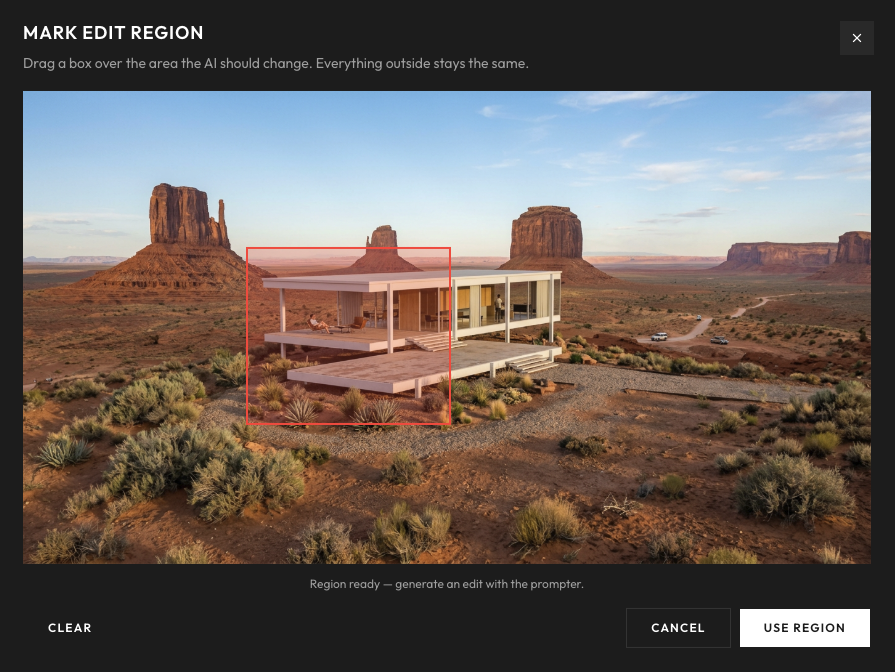
I will be straight with you. The $1,500 is mostly someone rebuilding your building so they can light it. Rendervis does not touch the geometry. Walls, windows, and proportions stay as you drew them. Then it does the cinematic post: atmosphere, materials, the presentation polish that used to be a separate invoice. Material studies, hero stills, the “can we see it in brick?” round. Same architecture. Minutes instead of weeks.
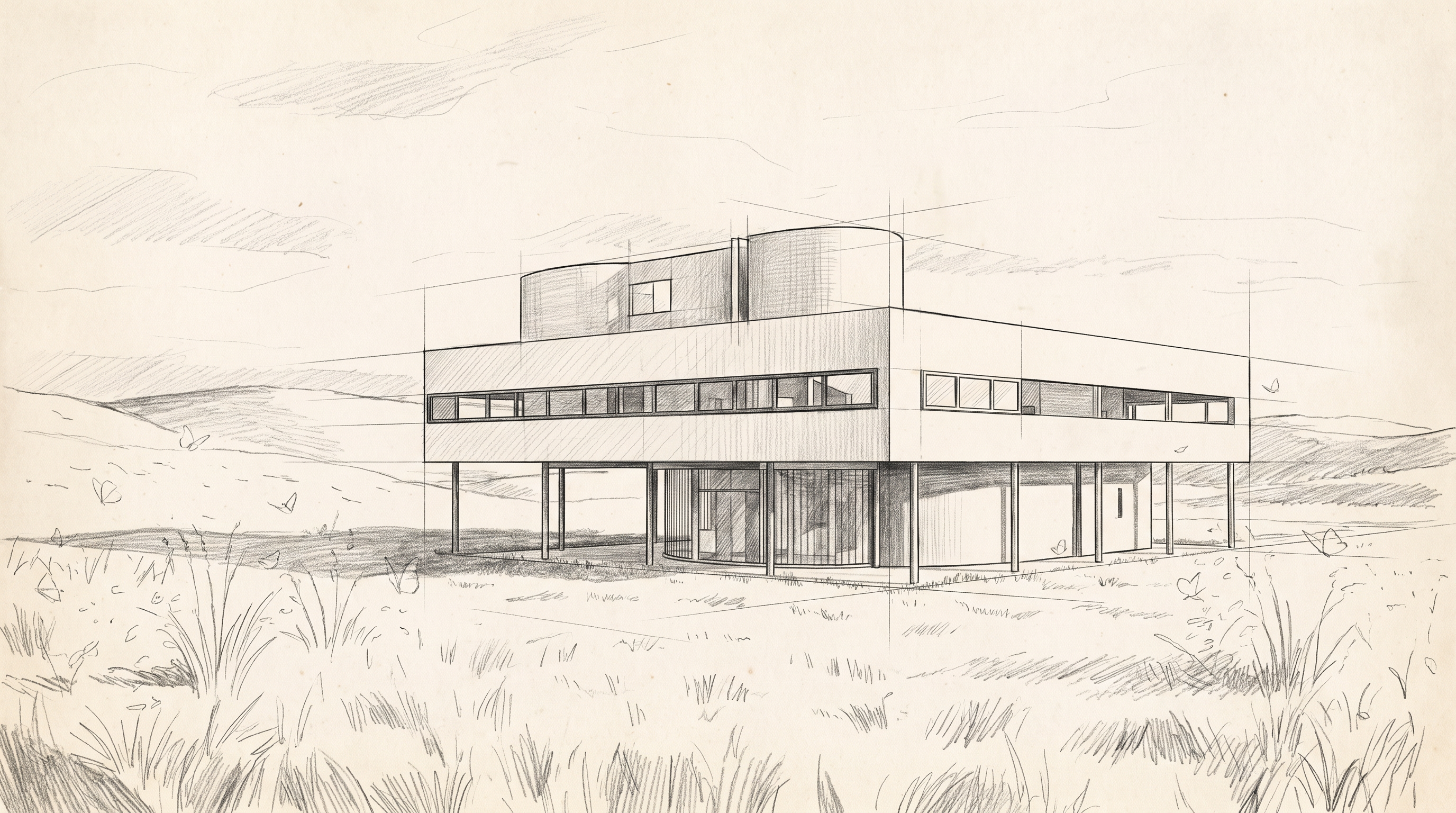
You hire a studio when nobody has modeled the project yet and you need that scene built from nothing. If you already have a sketch, a plan, a model view, or a still, you already have the hard part.
Which option fits your project?
- One hero image for marketing or pre sales. If you already have a drawing, model view, or still, AI rendering will get you a cinematic presentation image without changing the design. Hire a studio at $800 to $2,500 when you need someone to model the building from scratch.
- Steady volume, five or more images a month. AI rendering at $49 to $199 a month. A studio volume deal only makes sense if you still need full scene modeling on every frame.
- Concept work, client iterations, previews. AI. Faster than briefing a freelancer, cheaper than one revision round, and the geometry stays yours.
- Animation or walkthroughs. Traditional animation is $2,500 to $20,000+ per finished minute. Short clips generated from a still are a different, much cheaper product. See architectural animations.
- Tight budget, low stakes. A $30 marketplace gig or a $249 budget studio is fine for internal alignment. I would not put it in front of a client or an investor.
Architectural rendering cost: the bottom line
In 2026, plan on $600 to $2,500 per professional still (average around $1,500), $1,000 to $3,000 for aerials, and $2,500 to $20,000+ per animation minute. Then add revisions, rush fees, and multi week turnarounds. Going in house swaps those invoices for $70,000+ a year in salary, hardware, and software. That only pays at real volume.
The new options are the flat ones. AI rendering from $49 a month covers presentation stills and the iteration work that used to eat revision rounds, without rewriting your geometry. Before you sign the next studio quote, try it with a sketch you already have.
Start from the drawing you already have
FAQ
Most studios charge $600 to $2,500 per still. The average sits around $1,500 per image. Budget interiors can start at $249. Premium exteriors and aerials run $3,000 to $4,000.
You are paying for modeling, lighting, revisions, and calendar time, not for pixels. Scene complexity, how many views you order, extra revision rounds ($100 to $400), and rush fees (20 to 50%) move a quote more than the list price.
Usually yes, if you already have a sketch, a model, or a still. A $49 month AI plan costs less than one studio revision, keeps your geometry, and includes the cinematic post. You still hire a studio when the building has not been modeled yet and you need that scene built from nothing.
Plan on $70,000+ a year for one visualization seat: salary (about $62,000 to $71,000), a $2,000 to $5,000 workstation, and modeler plus renderer licenses. That only beats outsourcing once you are making about 60 studio priced images a year.
It is priced per finished minute. $2,500 at the budget end, $4,000 to $12,000 in the mid market, $20,000+ for cinematic work. 4K is often about double Full HD because of the extra compute.
Bring your vision to life.