

Guide
When Photorealism Is the Wrong Answer: Sketch, Watercolor, and Line Drawing
The most realistic image is not always the most convincing one. Style is a language, and each audience speaks a different one.
5 min readRendervis
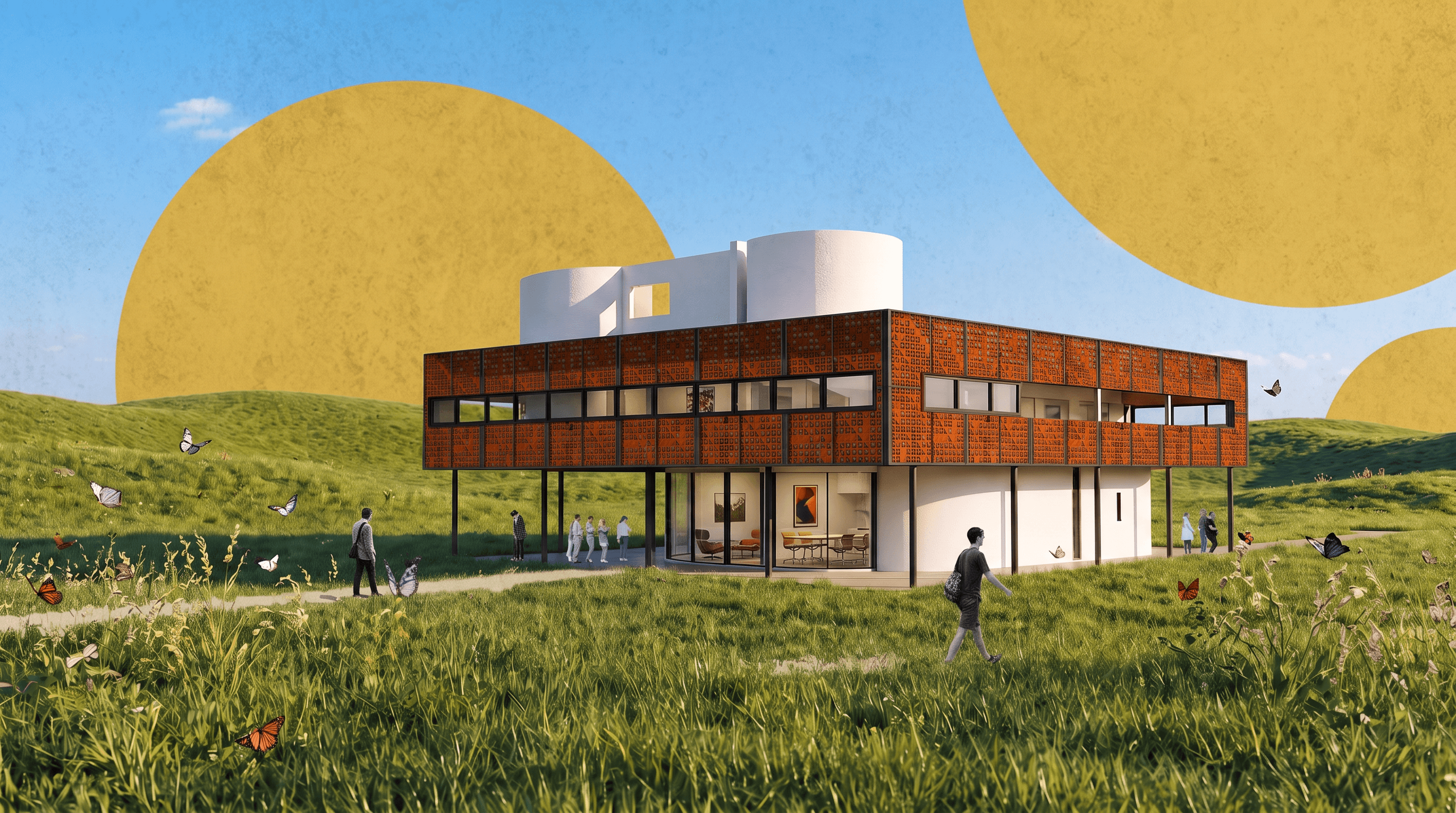
A photoreal render promises certainty, which is exactly wrong for early design phases. This article looks at what sketch, watercolor, and line drawing styles each communicate, when to use them, and why being able to switch styles on the same view changes how you present.
There is a moment in early design when a photoreal render actively hurts you.
You show a client a photorealistic image of a concept that is three weeks old, and they do exactly what the image invites them to do: they read it as finished. They comment on the sofa. They ask about the tree species. They assume the material in the image is the material they will get. The design conversation you wanted, about massing, light, and organization, never happens, because the image already answered every question with false confidence.
Photorealism is a promise. Sometimes you are not ready to make it.
Style is a statement about certainty
Every drawing style tells the viewer how finished the thinking is, before they read a single detail.
- A line drawing says: this is a proposition. Argue with it.
- A sketch says: this is a direction. Feel it, do not measure it.
- A watercolor says: this is an atmosphere. The details are still soft on purpose.
- A photoreal render says: this is the building. Approve it.
Experienced architects have always used this scale deliberately. Competition boards mix hard line drawings with atmospheric vignettes. Early client workshops run on sketches precisely because sketches invite participation. The photoreal image is saved for the moment the design can survive being read literally.
The problem was never knowing which style to use. The problem was that each style used to be a separate production.
What each style does best
Line drawing: the contract
Line drawings strip a design to its geometry. No mood, no weather, no persuasion. That makes them the right language for anyone who needs to evaluate rather than feel: contractors, planning reviewers, technical consultants. A line drawing of a facade puts the proportions on trial. If the elevation works as lines, it will work everywhere else.
Sketch: the invitation
A sketch is deliberately unfinished, and that unfinishedness is functional. Clients say things to a sketch they would never say to a render, because a sketch looks changeable. If you want honest feedback on a direction, present it in a style that looks like it can still move.
Watercolor: the atmosphere
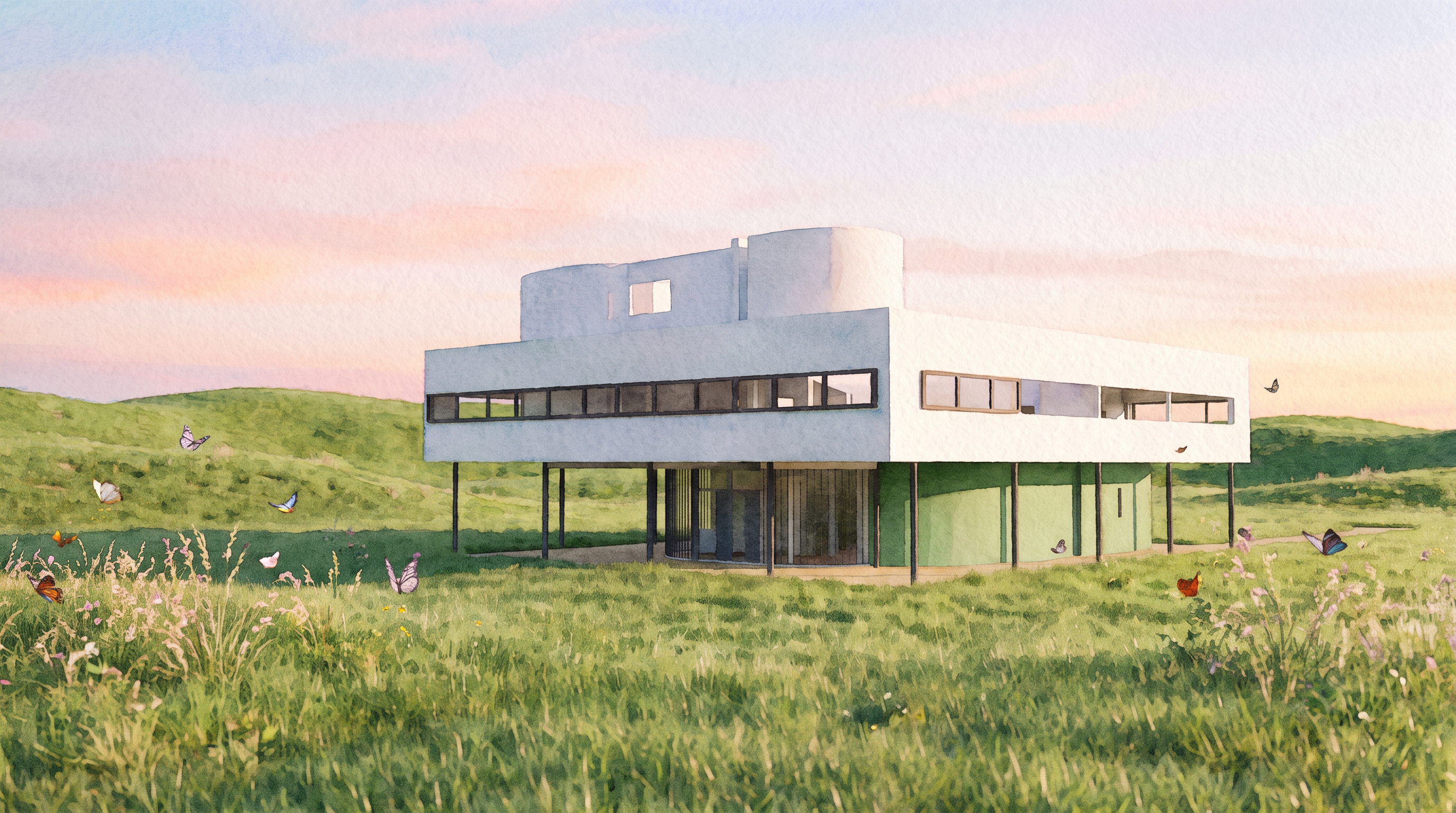
Watercolor occupies a specific and useful middle ground: it carries light, mood, and material temperature without asserting detail. It is the strongest style for competitions and public presentations, where you need emotional buy-in for a scheme whose specifics are still in motion. A watercolor lets a jury fall for the courtyard without asking about the window schedule.
Photorealism: the decision
Photorealism is for the moment of commitment. Material sign-off, marketing, planning submissions where realism is expected, and the final act of a client presentation. Its power is exactly what makes it dangerous early: it removes the audience's imagination from the process.
The same view in four languages
Here is what changed. In Rendervis, style is not a production decision made once per project. You take one view and switch it between photorealism, sketch, watercolor, and line drawing, or bring your own style and customize it. Same camera, same design, four languages.
That unlocks a way of presenting that used to be too expensive to do routinely:
- Open with the sketch. Set the tone: this is a conversation, not an unveiling.
- Show the watercolor for the key spaces. Sell the atmosphere while the details stay soft.
- Bring the line drawing when questions turn technical. Give the skeptics geometry they can measure.
- Close with one photoreal view. End on the promise, after the thinking has been agreed.
The same building, walked from proposition to promise in one meeting. Each audience in the room gets addressed in the style they trust.
Matching style to phase, not to taste
A simple rule of thumb that holds up well:
- Concept phase: sketch and line drawing. Certainty would be dishonest.
- Design development: watercolor and early photorealism. Atmosphere first, details emerging.
- Approval and marketing: photorealism. Now the image should be a promise, because now you can keep it.
The most common mistake is not choosing an ugly style. It is choosing a style whose level of certainty does not match the project's, in either direction. An over-polished early render kills a design conversation; an under-committed final image undermines confidence right when you need it.
Conclusion
Photorealism did not become less valuable. It became one option instead of the only destination. When switching a view between sketch, watercolor, line drawing, and photorealism takes seconds, style becomes what it was for the great presenters all along: a deliberate choice about how much certainty to project, made per audience and per phase.
Take a view from your current project and see it in another language. The version that unlocks the conversation might not be the realistic one.
FAQ
Can I apply different styles to the same render?
Yes. You start from one view and switch between photorealism, sketch, watercolor, and line drawing while the camera and design stay fixed. More styles are available in the app, and you can bring your own style and customize it.
Which style works best for competition boards?
Most boards benefit from a mix: line drawings for plans and elevations, watercolor or sketch vignettes for atmosphere, and at most one or two photoreal views. A board that is entirely photoreal often reads as a developer brochure rather than a design argument.
Will a sketch style stay true to my actual design?
The styles are applied to your view, not generated from scratch, so proportions, composition, and the design itself carry through. What changes is the drawing language: linework, washes, and the level of asserted detail.
When should I show a client the first photoreal image?
When you are ready for the design to be read literally. A good test: if a client asking "so this is the exact material?" would be a welcome question, you are ready for photorealism. If that question would derail the meeting, stay one style earlier.
Bring your vision to life.